

Understanding Terpenes for Beginners: Aroma, Flavor & Why Humidity Matters

Open a jar of fresh flower and take a smell. Citrus? Pine? Lavender? Something earthy, spicy, fruity, or sweet?
A lot of what you’re smelling comes from terpenes.
Terpenes are naturally occurring aromatic compounds found throughout the plant world. They’re what give lemons their bright citrus smell, pine trees their unmistakable forest aroma, and lavender its floral fragrance.
They’re also a big part of what makes different varieties of cannabis smell, taste, and feel distinct from one another.
If you’re new to terpenes, don’t worry. You don’t need a chemistry degree to understand them. Here’s the beginner’s guide.
What Are Terpenes?
Terpenes are aromatic compounds produced by plants. In nature, they can help plants attract pollinators, repel pests, and protect themselves from environmental stresses.
Cannabis produces many different terpenes, and the particular combination and concentration of those compounds contribute to each flower’s unique aroma, flavor profile, and effect.
Think about the difference between opening a container that smells strongly of citrus and another that smells earthy, piney, or floral. Those differences aren’t just about the strain name—the terpene profile plays a major role.
Terpenes are also commonly associated with different experiences and characteristics, although the way a particular flower affects someone depends on much more than a single terpene.
Meet Some of the Most Common Terpenes
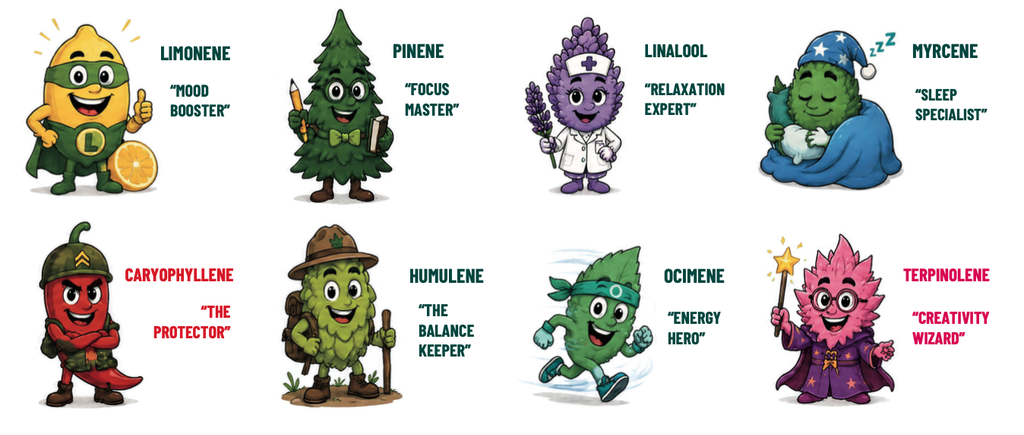
Here are eight terpenes worth knowing. We’ve given them nicknames to make them a little easier to remember:
🍋 Limonene — The “Mood Booster”
As its name suggests, limonene is commonly associated with bright citrus aromas like lemon and orange. It’s often described as uplifting and energetic.
🌲 Pinene — The “Focus Master”
If you’ve ever walked through a pine forest, you already know this aroma. Pinene has a fresh, crisp, pine-like scent and is commonly associated with alertness and focus.
💜 Linalool — The “Relaxation Expert”
Linalool is also found in lavender and has a soft, floral aroma. It’s commonly associated with calming and relaxing experiences.
🌿 Myrcene — The “Sleep Specialist”
Earthy, herbal, and sometimes slightly fruity, myrcene is one of the better-known cannabis terpenes. It’s frequently associated with relaxing, laid-back effects.
🌶️ Caryophyllene — “The Protector”
Caryophyllene has a spicy, peppery aroma and is also found in black pepper, cloves, and other spices. It stands out among terpenes because of its unusual interaction with the body’s endocannabinoid system.
🌱 Humulene — “The Balance Keeper”
Humulene has an earthy, woody, somewhat hoppy aroma. In fact, it’s one of the compounds responsible for the characteristic smell of hops.
⚡ Ocimene — The “Energy Hero”
Ocimene tends to have a sweet, herbal, and sometimes fruity aroma. It’s commonly associated with more lively or energetic terpene profiles.
✨ Terpinolene — The “Creativity Wizard”
Terpinolene can be harder to describe because its aroma combines elements that can seem floral, herbal, piney, and citrusy all at once. It’s often associated with uplifting and creative experiences.
These nicknames are a fun way to remember the different terpenes, but they’re not a promise of a particular effect. Cannabis contains many compounds that interact with one another, and everyone’s experience can be different.
Why Should You Care About Terpenes?
For years, cannabis shopping focused heavily on one number: THC percentage.
But THC doesn’t tell the whole story.
Two flowers with similar THC levels can smell completely different and produce noticeably different experiences. Their terpene profiles are one reason why.
That’s why learning to pay attention to aroma and terpene information can give you another useful way to understand what you’re buying.
Instead of simply asking, “What’s the THC percentage?” try asking:
What are the dominant terpenes?
You might eventually discover that you consistently prefer citrus-forward varieties rich in limonene, earthy varieties containing myrcene, or pine-forward profiles containing pinene.
Your nose can actually be a pretty useful tool.
There’s Just One Problem: Terpenes Are Fragile
That amazing aroma doesn’t necessarily stick around forever.
Terpenes are volatile aromatic compounds, which means they can evaporate and degrade over time. Heat, light, oxygen, and improper storage can all affect the quality of stored flower.
You’ve probably experienced this yourself.
Open a fresh container and the aroma can practically jump out of the jar. Leave that same flower sitting around improperly stored for weeks or months and it can become dry, brittle, harsh, and considerably less fragrant.
That disappearing smell isn’t just disappointing.
You’re losing part of what made the flower unique in the first place.

HUMIDITY MATTERS®
One of the easiest things you can control when storing flower is humidity.
Flower that’s stored too dry can lose moisture and aromatic compounds more quickly. On the other hand, excessively humid conditions aren’t desirable either because too much moisture can create conditions favorable to mold and mildew.
The goal isn’t simply to add moisture.
The goal is to maintain the right environment.
That’s the idea behind STASHLOGIX’s phrase:
HUMIDITY MATTERS®
At STASHLOGIX, we recommend keeping stored flower in an appropriate relative-humidity range and, more importantly, being able to see what’s actually happening inside your jar.
That’s why we created the STASHLOGIX SmartJar.
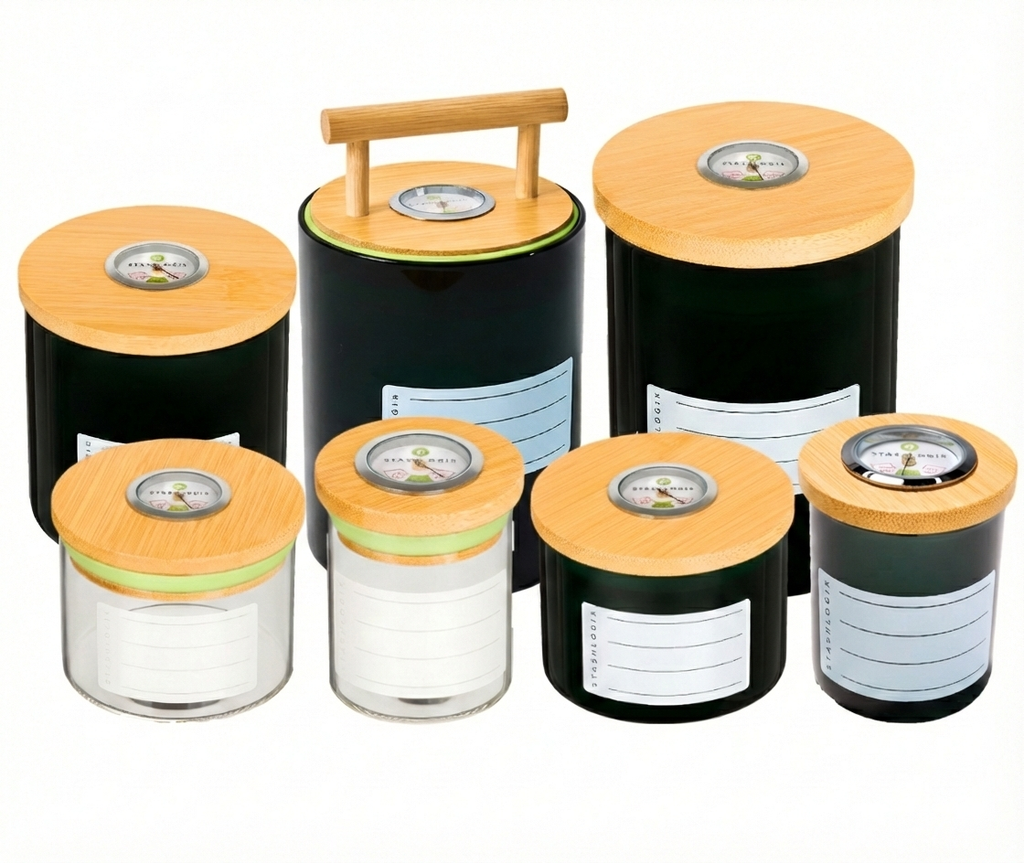
SmartJars: Know What’s Happening Inside Your Jar
Most storage jars leave you guessing about humidity.
The SmartJar doesn’t.
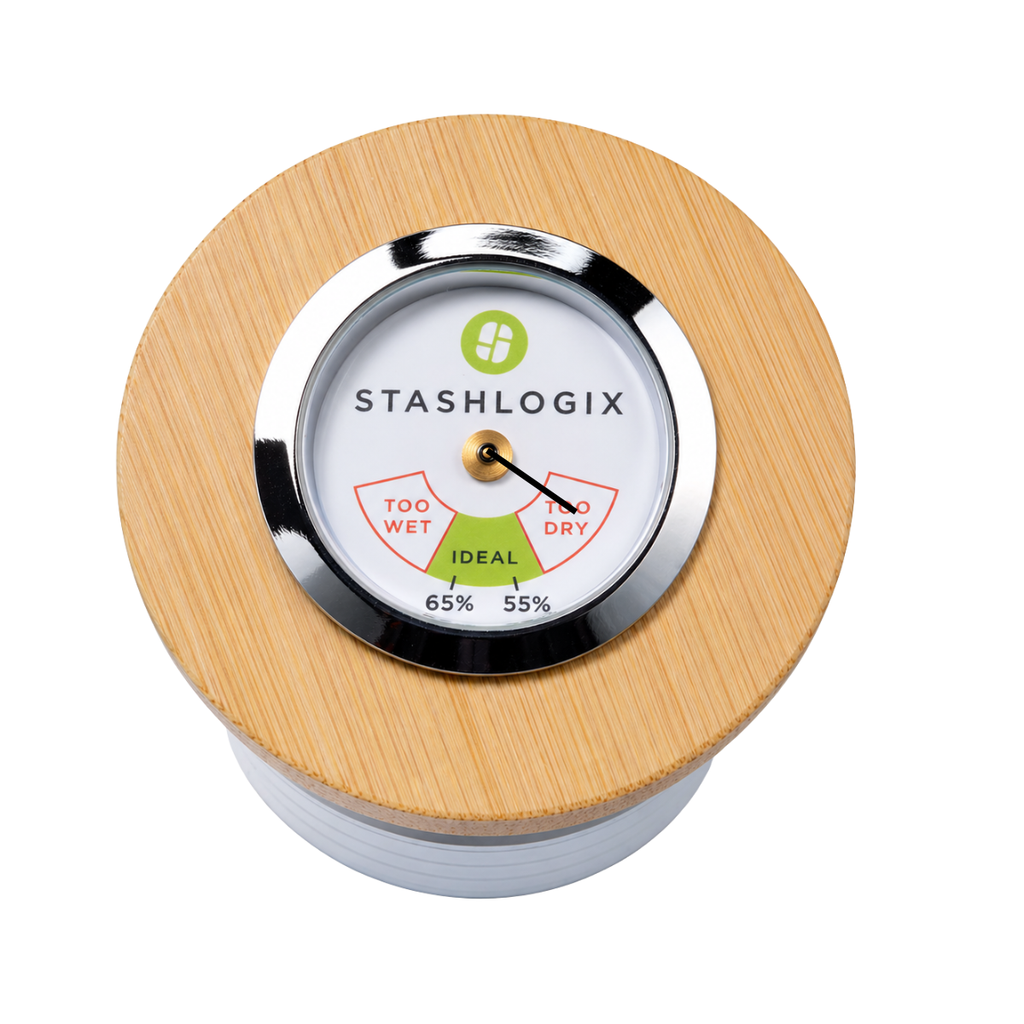
Each SmartJar incorporates a hygrometer into the lid so you can monitor the relative humidity inside your jar at a glance. The bamboo lid, silicone gasket, and the dark glass container are designed to create a better storage environment, while the hygrometer gives you information about what’s happening inside.
Instead of wondering whether your flower is getting too dry, you can actually check.
Our terpene guide sums up the idea simply: SmartJars help maintain proper humidity to protect fragile terpenes and keep flower fresher.
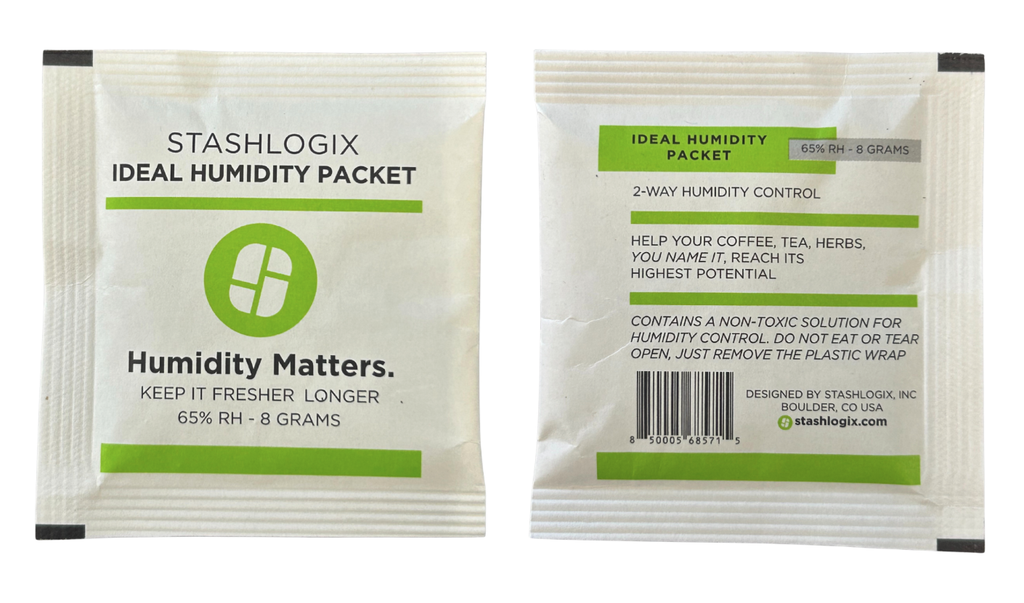
Add an IDEAL Humidity Packet
Monitoring humidity tells you what’s happening.
An IDEAL Humidity Packet helps you do something about it.
STASHLOGIX IDEAL Humidity Packets are designed to maintain 55% – 65% relative humidity using two-way humidity control. That means the packet can release moisture when conditions become too dry and absorb excess moisture when conditions become too humid.
Pair an IDEAL packet with a SmartJar and you have a simple plug-and-play system:
SmartJar = monitor the humidity.
IDEAL = help regulate the humidity.
Together, they’re designed to create a more stable storage environment that helps protect the flower’s moisture, aroma, and delicate terpenes rather than letting those aromatic compounds disappear prematurely.
Because you paid for those terpenes.
You might as well keep them.
The Beginner’s Terpene Cheat Sheet
The next time you buy flower, don’t look only at the THC percentage.
Smell it. Look at the terpene information if it’s available. Notice which aromas and varieties you enjoy most. Over time, you may start recognizing patterns in the terpene profiles you prefer.
And once you bring your flower home, remember that how you store it matters too.
Learn the terpenes.
Follow your nose.
Protect the flower.
And remember: HUMIDITY MATTERS®.
Terpene descriptions and commonly associated effects are provided for educational purposes only. Individual experiences vary, and these descriptions are not intended as medical claims.
Blog
This section provides an overview of the blog, showcasing a variety of articles, insights, and resources to inform and inspire readers.
-
Best Practices For Long Term Storage
You found something you really like. Maybe you bought a little extra. Now the question…
-

Stigmatics Chronicles: A Journey Through Comedy
This paragraph serves as an introduction to your blog post. Begin by discussing the primary…
-
Why Terpenes Matter For Your Experience
This paragraph serves as an introduction to your blog post. Begin by discussing the primary…

Leave a Reply